
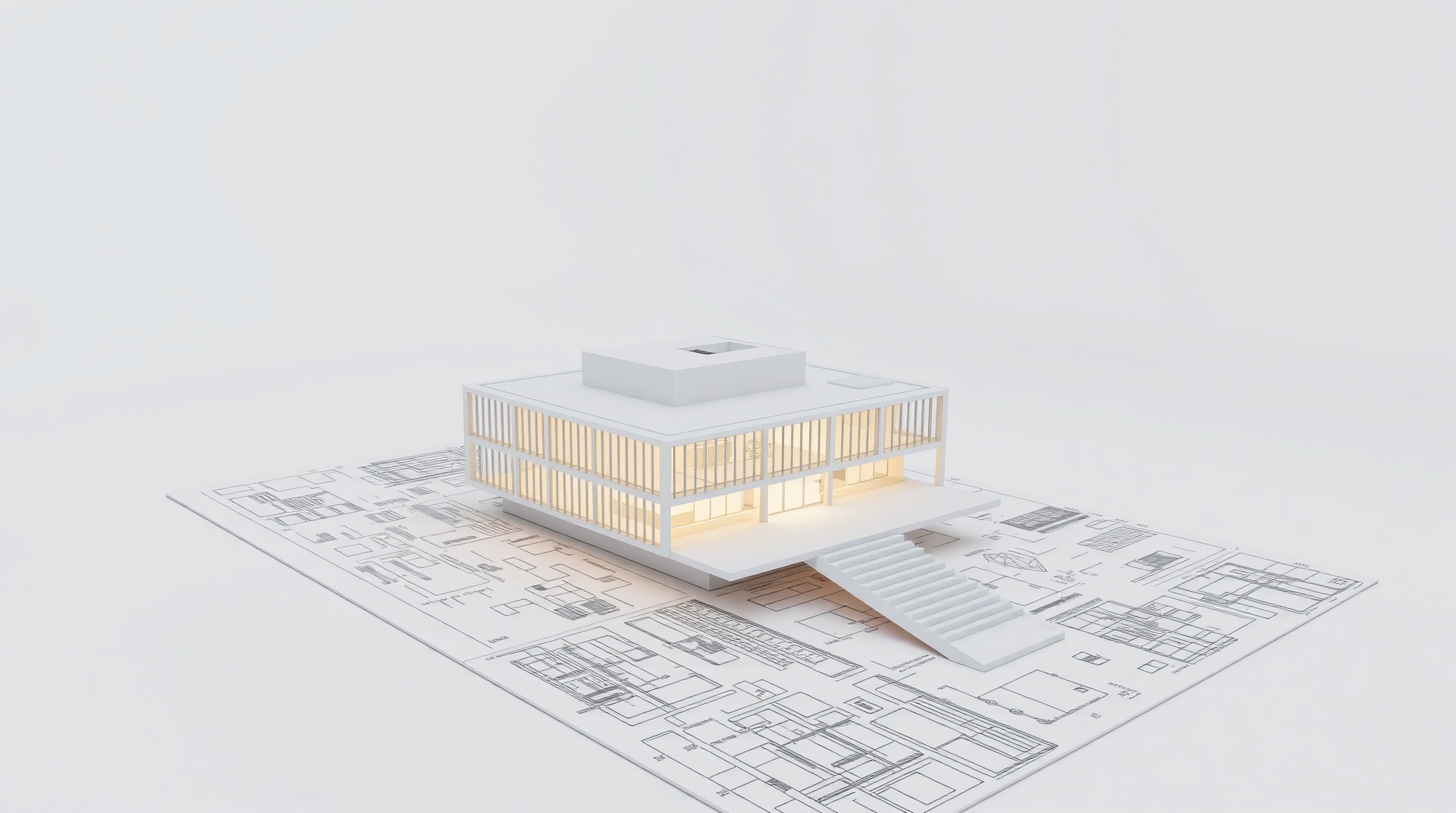
The Silent Salesperson: How Architectural Scale Models Close Deals That Digital Can't
Walk into any top-performing real estate sales office in Mumbai, Pune, Bengaluru, or Hyderabad and you will find it at the centre of the room — a hand-crafted architectural scale model, lit from within, drawing buyers like a magnet. In a world saturated with VR headsets, CGI fly-throughs, and interactive 3D tools, the physical scale model has not just survived — it has quietly become the single highest-converting sales asset in premium real estate. Here is why.
The Neuroscience of Physical Models: Why Touch Beats Screen
Neuroscience research consistently shows that physical objects activate more regions of the brain than digital representations of the same object. When a buyer leans over an architectural scale model, their motor cortex, spatial reasoning centres, and emotional memory circuits all fire simultaneously. They are not just looking — they are mentally inhabiting the space.
A 3D walkthrough video, no matter how photorealistic, is processed by the brain as television — a passive observation experience. A scale model, by contrast, is processed as reality. The buyer subconsciously scales themselves into the model. They trace the route from the lobby to their floor. They notice how the park faces east. They point to the unit they want.
This transition from passive observer to active explorer is precisely what triggers the emotional commitment that leads to a booking. Sales teams across India consistently report that buyers who spend more than five minutes at a scale model are 3–4× more likely to book than those who only watch a presentation screen.
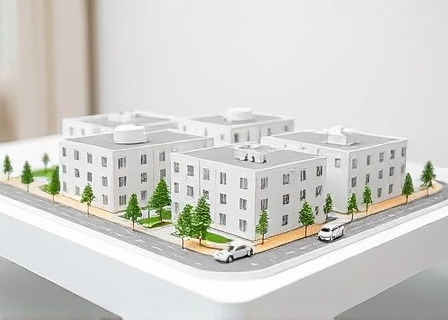
A detailed township scale model with LED lighting — Alliance Media Labs
The Trust Gap That Digital Cannot Bridge
Indian real estate buyers carry a deep-seated skepticism born of a generation of undelivered promises. Delays, design changes, amenity deletions — these experiences have made the modern buyer acutely suspicious of marketing materials. A render can be made to look like anything. A VR tour can exaggerate ceiling heights and views. But a precisely built architectural scale model, constructed to approved drawings and placed under glass in a sales office, communicates one thing above all else: we are serious, and this is real.
The physical permanence of a scale model is itself a trust signal. It cannot be edited overnight. It exists in three dimensions and can be photographed from every angle. It invites scrutiny rather than avoiding it. For a developer launching a ₹5 crore or ₹50 crore product, this tangibility is not a marketing luxury — it is a psychological necessity.
RERA-registered projects gain an additional benefit: a scale model built precisely to approved drawings is the safest possible marketing tool under RERA, because it represents only what has been officially sanctioned — unlike a render, which can depict aspirational finishes that may not be delivered.
What Separates a Premium Scale Model from an Average One
Not all scale models are created equal. The difference between a model that impresses and one that underwhelms comes down to six craft decisions:
Landscape Realism
Sponge foliage dyed to species-accurate colours, model-scale street furniture, and water features with actual resin pooling create a miniature world that feels lived-in rather than toylike.
LED Fibre-Optic Lighting
Individual unit lighting, programmable zone illumination by phase, and underwater LED for pool areas transform an evening model viewing into a cinematic experience that mirrors the project's lifestyle promise.
Facade Material Accuracy
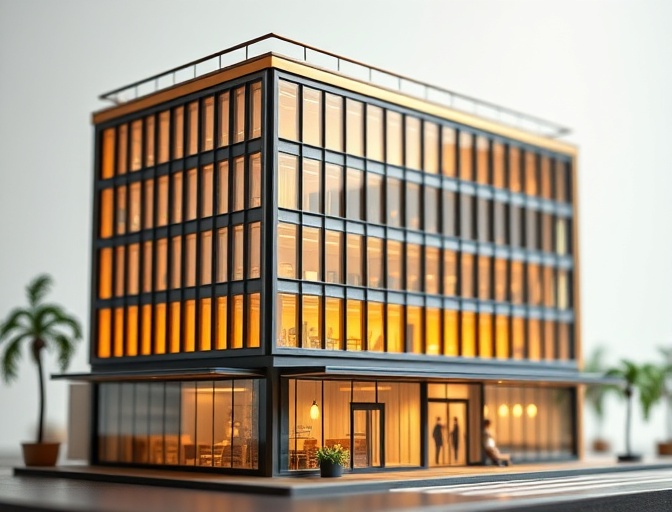
ABS plastic panels etched to replicate the actual cladding pattern, powder-coated metal handrails, and laser-cut acrylic glazing ensure the model matches the approved architectural drawings in every visible detail.
Contextual Surroundings
Premium models include the immediate neighbourhood — roads, existing landmarks, the metro line, the river — giving buyers the spatial context to understand why this location commands a premium.
Interactive Integration
Touchscreen panels embedded in the model table allow buyers to select a floor, highlight a unit, or view a floor plan — merging the tactile power of the physical model with the information depth of digital tools.
Archival Durability
Models built for long-term sales office deployment use UV-stable paints, tempered glass display cases, and anti-static protective coatings to remain pristine for 3–5 years of continuous display.
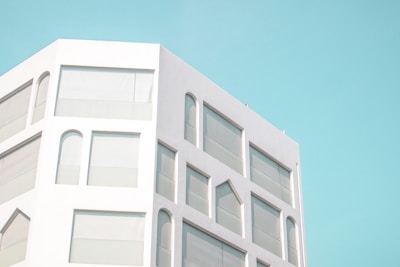
Fibre-optic lit tower model with landscape detailing — Alliance Media Labs
The Scale Model as a Sales Office Centrepiece Strategy
The placement and presentation of a scale model within a sales experience centre is itself a science. Leading sales office designers treat the model as the room's anchor — the first thing a buyer sees on entry and the last thing they interact with before stepping into the closing booth.
A well-designed sales office journey works as follows: The buyer enters and is immediately drawn to the model, which gives them a macro understanding of the project. A sales manager then walks them through the model, pointing out their specific building, the amenities deck, the view corridor. Only after this spatial orientation does the buyer sit down to review floor plans and pricing — arriving at that conversation already emotionally anchored.
This sequence is not accidental. It mirrors the way the brain processes decisions: emotion first, logic second. The scale model handles the emotional priming. Everything that follows is the logical justification for a decision the buyer has already made instinctively.
Choosing the Right Scale: A Developer's Guide
Scale selection is the first and most consequential decision in the model brief. The wrong scale can make a luxury project look cramped, or make an intimate boutique development look sparse. Here is a practical guide:
| Project Type | Recommended Scale | What It Shows Best |
|---|---|---|
| Large Township (50+ acres) | 1:1000 or 1:500 | Phase layout, road network, macro amenities |
| Mid-Rise Residential Complex | 1:300 or 1:200 | Building massing, podium, landscaping |
| Single High-Rise Tower | 1:200 or 1:150 | Facade detail, setbacks, tower crown design |
| Luxury Villa Cluster | 1:100 | Individual villa volumes, private gardens, driveways |
| Showflat / Unit Interior | 1:50 or 1:25 | Room proportions, furniture layout, ceiling features |
| Commercial / Mixed-Use | 1:300 or 1:200 | Retail podium, office floors, connectivity |
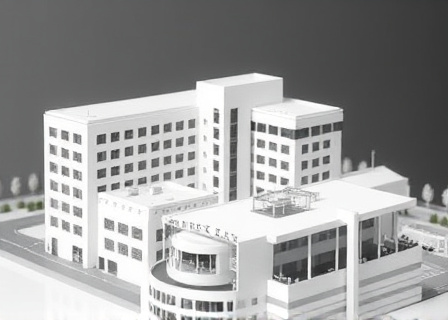
Township-scale model at 1:500 — Alliance Media Labs
When Scale Models Outperform VR and 3D Walkthroughs
VR tours and 3D walkthroughs excel at showing interior finishes, material quality, and the emotional feel of a space. But they have a structural limitation: they are inherently first-person experiences. The buyer is always inside the project, never able to see it as a whole.
A scale model solves this. It gives the buyer a god-eye view of the entire project — showing how the towers relate to each other, how the park is positioned relative to the main building, how Phase 1 connects to Phase 2. This macro understanding is critical for township decisions, where buyers are investing in a neighbourhood, not just an apartment.
There are five specific scenarios where a scale model consistently outperforms digital:
Large Group Presentations
A scale model can be viewed simultaneously by 8–12 people. A VR headset accommodates one person at a time. For channel partner presentations, investor days, or group site visits, the model wins by design.
NRI and Diaspora Buyers
NRI buyers making multi-crore decisions from abroad typically visit on short trips. A scale model gives them a definitive physical reference that they can photograph, share with family, and return to — creating a tangible anchor for a remote decision.
Senior Buyer Demographics
Buyers above 55 — a significant segment for retirement communities and senior living projects — are more comfortable with physical objects than digital interfaces. A model is inclusive in a way that a VR headset is not.
Government and Institutional Sales
Government housing projects, PSU staff housing, and institutional bulk sales involve committees, not individuals. A scale model facilitates group deliberation and creates a shared visual reference for multi-stakeholder decisions.
Media and PR Launches
A scale model is photogenic in a way that a screen presentation is not. Press coverage of a project launch almost always features the model — the newspaper photograph, the social media post, the news segment. The model is PR infrastructure.
The Alliance Media Labs Approach to Scale Model Production
At Alliance Media Labs, we treat every architectural scale model as a piece of precision craft — not a commodity product. Our production process begins with a deep brief: we study the approved architectural drawings, understand the project's market positioning, and align the model's level of detail with the sales experience it needs to support.
Our models are built by a team of trained model-makers using CNC-cut acrylic and ABS structural cores, hand-finished facades, real-texture landscape materials, and LED fibre-optic lighting systems integrated before final assembly. Every model goes through a client review at the 60% completion stage, ensuring any design refinements can be incorporated before final finishing.
We have built models for some of India's most recognisable developers — from township launches covering hundreds of acres to intimate luxury villa clusters of eight homes. Each model ships in custom-built protective cases, with installation supervision at the destination sales office.
Precision model production — Alliance Media Labs
Frequently Asked Questions
1Are architectural scale models still relevant in the age of VR and 3D walkthroughs?
Absolutely. Scale models serve a fundamentally different purpose than digital tools. They trigger tactile curiosity, draw crowds at sales offices, and anchor trust in a way that a screen cannot replicate. The most sophisticated developers use both — digital tools for remote reach, and scale models for in-person conversion.
2What materials are used to make a high-quality architectural scale model?
Premium scale models use a combination of ABS plastic or acrylic for structural elements, powder-coated metal for precision detailing, real-texture landscaping materials (sawdust dye, moss flock, sponge foliage), LED fibre-optic lighting for units and amenities, and laser-cut acrylic for glazing. The choice of material depends on the scale, purpose, and display lifespan required.
3How long does it take to build an architectural scale model for a large township?
A detailed township model at 1:500 or 1:300 scale typically takes 45–75 days from drawing receipt to delivery. A single tower or boutique villa cluster at 1:100 can be completed in 20–30 days. Rush timelines are possible with early brief sharing and dedicated production slots.
4What scale should I choose for my project's model?
For township master plans, 1:1000 or 1:500 gives the full picture. For mid-rise or high-rise towers, 1:300 or 1:200 shows podium detail well. For luxury villas, duplex units, or showflat replicas, 1:100 or 1:50 captures interior layouts and finish quality. Your AML team will recommend the right scale based on your sales office footprint.
5Can the model be updated if the design changes during construction?
Yes. Modular model construction allows individual building blocks, phases, or landscape sections to be replaced or updated without rebuilding the entire model. This is important for phased township launches where buildings are released over 3–5 years.
6How do you safely transport a large scale model across cities?
All AML models are built in modular sections and packed in custom foam-lined ATA-rated cases. For transport to Tier-2 cities or international NRI exhibitions, we provide double-walled crating with vibration dampening. Our team can also supervise installation at the destination venue.
7Can LED lighting and interactive screens be integrated into the model?
Yes. We offer LED fibre-optic lighting for individual units, common areas, and pool decks; programmable RGB zone lighting to highlight different phases; embedded touchscreen panels for floor plan selection; and motion-sensor illumination that activates when visitors approach. These features dramatically increase dwell time at the model.
8What inputs do you need to begin production?
We need architectural drawings (AutoCAD DWG files preferred), a site plan with north orientation, elevation drawings for all towers, a landscaping brief or reference images, and your brand colour palette. If drawings are not finalised, we can work from BIM models or even rendered images as a starting reference.
9Do RERA regulations require a scale model at the sales office?
RERA does not mandate a physical scale model, but it requires that all marketed materials accurately represent the approved project layout. A scale model built precisely to approved drawings is therefore the safest marketing tool under RERA — it cannot be accused of misrepresentation the way a stylised render might.
10How much does an architectural scale model cost in India?
Pricing depends on scale, complexity, materials, and interactive features. A single tower model starts from ₹2–4 lakhs; a mid-size residential complex is typically ₹6–15 lakhs; large township models with full LED integration can range from ₹20–50 lakhs. Contact our team for a detailed quote based on your specific project.
Conclusion
The architectural scale model is not a relic of pre-digital marketing. It is the one sales tool that digital technology has consistently failed to replace — because it operates in a dimension that screens cannot reach: the physical world that buyers trust with their bodies, not just their eyes.
In India's fiercely competitive real estate market, where buyers carry both ambition and skepticism into every sales office visit, a meticulously crafted architectural scale model is the silent salesperson that never loses its composure, never oversells, and never needs a day off. It works every hour the sales office is open — drawing crowds, building trust, and closing deals.
Commission Your Architectural Scale Model
Talk to our team today for a detailed consultation and quote tailored to your project.